
Tooth Mouse and Caries Prevention - Does it have a place?
Introduction
Tooth Mousse is one of the most commonly recommended remineralisation products in paediatric dentistry. Containing casein phosphopeptide-amorphous calcium phosphate (CPP-ACP). It was developed at the University of Melbourne in Australia.
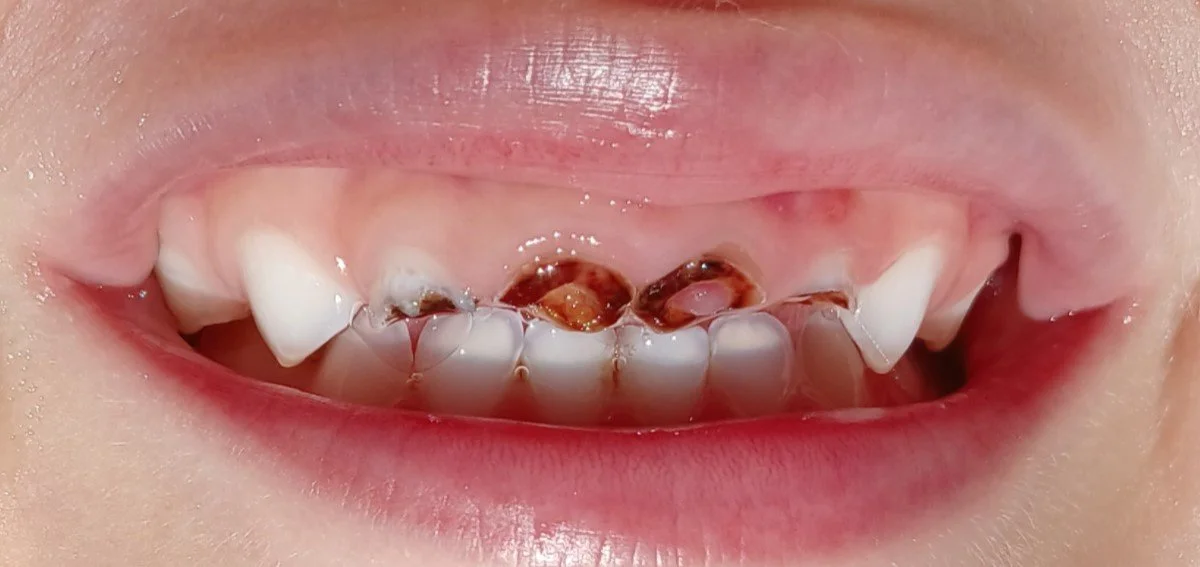
We find many patients come in using toothmousse after their dental practitioner has recommended that it will help prevent, or arrest, their child’s decay. However, is it work the cost? Essentially, does Tooth Mousse prevent dental caries?
How Does Tooth Mousse Work?
CPP-ACP is derived from milk protein. The science behind it is really sound and it stabilised bioavailable calcium and phosphate, meaning you have materials available for remineralisation.
The proposed benefits include:
Increasing calcium and phosphate availability around enamel
Reducing enamel demineralisation during acid attacks
Promoting remineralisation of early enamel lesions
Supporting fluoride uptake when used alongside fluoridated toothpaste
The biological mechanism is well established and supported by laboratory and in-situ studies. However, proving this in a lab compared to a patients mouth is a different issue.
What Does the Evidence Show?
Early Systematic Reviews
One of the earliest systematic reviews examining CPP-ACP for caries prevention was published by Yengopal and Mickenautsch in 2009.
After reviewing the available clinical studies, the authors concluded that while CPP-ACP showed promise, the evidence was insufficient to demonstrate a clear caries-preventive benefit beyond established preventive measures - such as a fluoridate toothpaste (>1000ppm). As always in research, they noted significant variation in study design, outcome measures and overall quality of evidence.
Their conclusion was cautious: CPP-ACP may have preventive potential, but stronger clinical evidence was needed before routine recommendations could be made.
Evidence in Primary Teeth
For paediatric dentists, the most important question is whether Tooth Mousse prevents caries in the primary dentition.
A systematic review by Wang and colleagues specifically evaluated non-fluoride agents for preventing dental caries in primary teeth. The review included CPP-ACP alongside other non-fluoride interventions and assessed their effectiveness in reducing caries development.
The authors found that:
CPP-ACP appeared more effective than placebo in some studies.
Evidence was inconsistent when CPP-ACP was compared with fluoride-containing interventions.
The overall quality of evidence was low.
There was insufficient evidence to recommend CPP-ACP as a primary caries-prevention strategy.
Again, the authors concluded that further high-quality randomised controlled trials were required before definitive recommendations could be made regarding routine CPP-ACP use for preventing caries in children.
This remains one of the most clinically relevant reviews because it specifically focuses on the primary dentition rather than orthodontic or adult populations.
What about Tooth Mousse and Fluoride Together?
Since most children already brush with fluoridated toothpaste, a more clinically useful question is whether adding Tooth Mousse provides benefits beyond fluoride alone. Keep in mind in Australia we are idiots and recommend a toothpaste that is <1000ppm, and therefore below a level that works until 6 yrs of age.
Tao and colleagues addressed this question in a 2018 systematic review and meta-analysis that included ten randomised controlled trials involving patients with early caries lesions.
Their findings were particularly interesting.
For smooth surface lesions, the addition of CPP-ACP to fluoride therapy produced no significant improvement compared with fluoride alone.
However, for early occlusal lesions, CPP-ACP combined with fluoride demonstrated superior outcomes compared with fluoride monotherapy. However, when we look at the American Dental Association guidelines - recommendations for occlusal lesions are sealants… Which seems an obviously more predictable solution compared to ongoing application of CPP-ACP
The authors concluded that CPP-ACP may provide additional benefits in selected situations, particularly when managing early occlusal lesions, but larger and better-designed clinical studies were still required.
These findings support an important theme seen throughout the literature: CPP-ACP appears to work best as an adjunct to fluoride rather than as a replacement for fluoride.
Recent Meta-Analyses
A more recent systematic review and meta-analysis by Sharda and colleagues evaluated both CPP-ACP and fluoride-containing CPP-ACP products.
The review found evidence that CPP-ACP products could enhance remineralisation of early enamel lesions and improve lesion regression in some situations. However, when examining true caries-preventive outcomes, the evidence remained limited.
The authors concluded that CPP-ACP and CPP-ACPF products have remineralisation potential, but the certainty of evidence supporting meaningful caries prevention remained low.
Similarly, Raphael and Blinkhorn reviewed the evidence for Tooth Mousse and concluded that although CPP-ACP may have a role in managing early enamel lesions, there was insufficient evidence to demonstrate superiority over fluoride toothpaste for routine caries prevention.
What Do Clinical Guidelines Say?
Perhaps the strongest indication of the current state of evidence comes from evidence-based clinical guidelines.
The American Dental Association's guideline on non-restorative caries management reviewed available evidence for numerous preventive and remineralisation therapies.
The guideline identified strong evidence supporting interventions such as:
Fluoride toothpaste
Fluoride varnish
Sealants
Silver diamine fluoride
CPP-ACP products were not recommended as first-line caries management agents because the available evidence was not as strong or consistent as that supporting fluoride-based interventions.
This does not mean Tooth Mousse is ineffective. Rather, it means that fluoride continues to have substantially stronger evidence for preventing dental caries.
Why Is the Evidence So Uncertain?
Several factors contribute to the uncertainty surrounding CPP-ACP.
Most Children Already Use Fluoride
Because most participants in modern studies brush with fluoridated toothpaste, it can be difficult to determine how much additional benefit CPP-ACP provides. Keep in mind again Australia has idiotic fluoride guidelines. We have information about it here:
Why The Australian Guidelines on Fluoride Use Are (likely) Contributing To Decay In Australian Children. (An opinion piece and what should you consider doing in your practice) — Kids Dental Tips
Fluoride and Kids – What Works and How Much? — Kids Dental Tips
Small Sample Sizes
Many CPP-ACP studies involve relatively small numbers of participants, reducing confidence in the findings.
Short Follow-Up Periods
Dental caries develops over years, yet many studies evaluate outcomes over only months.
Different Outcome Measures
Researchers often assess different outcomes, including:
White spot lesions
Remineralisation
Lesion progression
New carious lesions
Surface microhardness
This variation makes direct comparison between studies difficult.
So When Should We Recommend Tooth Mousse?
Based on the current evidence, Tooth Mousse should be viewed as an adjunctive therapy rather than a primary caries-prevention strategy.
It may be reasonable to recommend CPP-ACP for:
Children at elevated caries risk
Patients with early enamel demineralisation
Children with enamel defects
Orthodontic patients with early white spot lesions
Patients with reduced salivary flow
However, these recommendations should be made alongside—not instead of—evidence-based preventive measures.
Takeaway
The biological rationale for Tooth Mousse is strong, and there is good evidence that CPP-ACP can assist remineralisation of early enamel lesions. Unfortunately, the research doesn’t make it super clear what its role is and commonly its reported that ‘more high quality evidence is required’.
However, when the question is narrowed to caries prevention, the highest-quality evidence consistently shows that:
CPP-ACP may be superior to placebo in some situations.
CPP-ACP can enhance remineralisation of early lesions.
CPP-ACP may provide additional benefit when combined with fluoride for selected lesions.
Evidence that CPP-ACP prevents new cavities better than fluoride alone remains limited.
Fluoride-based interventions continue to have substantially stronger evidence for caries prevention.
What Do We Recommend In Our Clinical Practice
Tooth mousse is expensive and another ‘thing’ for parents to do. I also feel, anecdotally, that families think it is a magic cream that will stop decay. Why? Maybe because it’s easier than actually brushing teeth with a 1450ppm toothpaste twice per day and flossing.
We have much better evidence and recommendations, for using a fluoridated toothpaste, fluoride varnishes up to 4 times per year and flossing. Most families that are doing this are not developing new lesions.
So ultimately, we do not recommend it as a first line. If families are doing all of the above and still developing decay, we then go to 5000ppm toothpaste. They can choose to use CPP-ACP if they want as well, it won’t hurt, maybe it has some benefit (??? - the science is good) but on its own it won’t cut the mustard.
What about anti-fluoride families? Bad news team - it seems to only really work in the presence of fluoride…
Hope this helps!
Key References
Wang Y, Li J, Sun W, Li H, Cannon RD, Mei L. Effect of non-fluoride agents on the prevention of dental caries in primary dentition: A systematic review. PLoS One. 2017.
Tao S, Zhu Y, Yuan H, et al. Efficacy of fluorides and CPP-ACP vs fluorides monotherapy on early caries lesions: A systematic review and meta-analysis. PLoS One. 2018.
Yengopal V, Mickenautsch S. Caries preventive effect of casein phosphopeptide-amorphous calcium phosphate (CPP-ACP): A systematic review and meta-analysis. Acta Odontologica Scandinavica. 2009.
Sharda S, Jindal R, Singh S, et al. Remineralization potential and caries preventive efficacy of CPP-ACP and CPP-ACPF: A systematic review and meta-analysis. Oral Diseases. 2021.
Raphael S, Blinkhorn A. Is there a place for Tooth Mousse in the prevention and treatment of early dental caries? A systematic review. 2015.
Li J, Xie X, Wang Y, Yin W, Antoun JS, Farella M, Mei L. Long-term remineralizing effect of casein phosphopeptide-amorphous calcium phosphate on early caries lesions in vivo: A systematic review. Journal of Dentistry. 2014.
Slayton RL, Urquhart O, Araujo MWB, et al. Evidence-based clinical practice guideline on nonrestorative treatments for carious lesions. Journal of the American Dental Association. 2018.